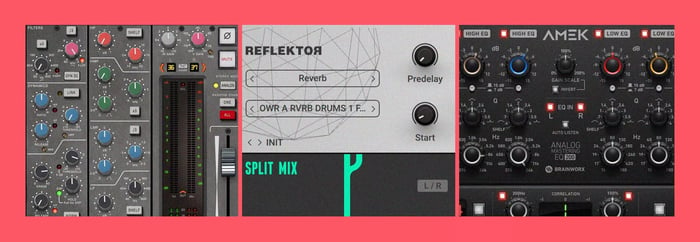

When William J. Sullivan (Kid Cudi, Ty Dolla $ign, Selena Gomez) answers our video call from his studio, he’s knee-deep in a restoration project using Ozone’s Stem EQ. “This thing’s crazy!” he says, shaking his head. “I’m boosting seven, eight dB and it doesn’t sound weird!”
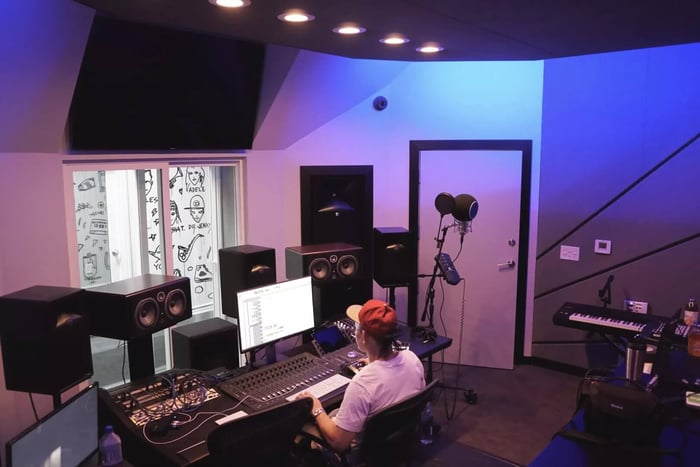
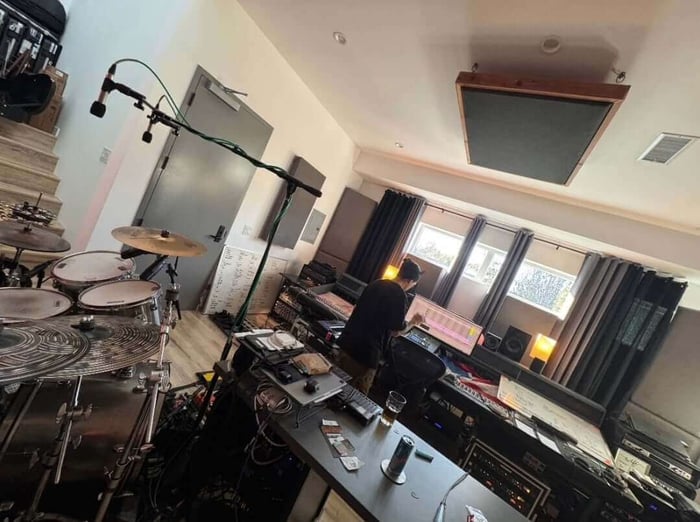
To his left sits a 56-channel AMEK Mozart console; to his right, the sun-drenched amenities of his California studio, BLANK. It’s a far cry from his early days as a five-year-old memorizing jukebox numbers in Philadelphia or touring in a black metal band at thirteen.
Getting started: from jukebox hustle to Power Rangers
Sullivan’s career trajectory is a masterclass in versatility and work ethic. Long before he was working with global superstars like Kanye West and Kid Cudi, he was learning the business of music on the ground.
At five years old, Sullivan was already ear-training at a local bar. "People would bet me five bucks if I knew the newest song in the jukebox," he recalls. "I would come home from school, watch MTV, learn the seven songs that were new, and then just make bank at this place.”
Sullivan’s foothold in the industry came through post-production, where he spent four years producing 22 minutes of music a week with a seven-day turnaround. “Someone forgot to do their cues,” he says. “I just popped in and was like, I can do them like right now. I did them on the laptop, and they were like, this will cut the mustard for today. Do you want to do this full time?”
After joining Kanye West’s team, Sullivan worked through the intense "five EPs in five weeks" sessions. This high-pressure environment inspired the tattoo on his chest: "Dare to Fail." As Sullivan puts it, “If you asked me, can you do this? I would’ve said ‘hell no!’... But I wasn't given a choice. So now I know: even though you don't think you can do something, just try it."
Today, Sullivan has stepped away from the major-label grind to focus on his own space. We sat down with him to discuss his transition to Atmos, his "80 Hz rule," and the specific tools he uses to keep his tracks competitive.
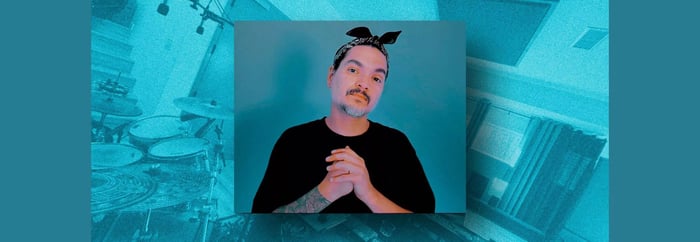
William J. Sullivan in a session
William’s top tools for mixing, mastering, and restoration
Despite being surrounded by high-end outboard gear, Sullivan is remarkably gear-agnostic. "You don't need any of this shit," he tells visitors. "Your Apollo Twin? No one's gonna know!" When it comes to digital tools, however, he has clear favorites for his daily workflow.
1. Automating Ozone Stem EQ
For restoration work where original sessions are unavailable, Sullivan relies on the Stem EQ and Master Rebalance modules in Ozone . He often automates the volume for specific vocal blocks to breathe new life into old recordings without affecting the entire frequency spectrum.
“It's been a lifesaver on the last couple projects,” Sullivan explains. “Artists that are going in their back catalog, they do not have their sessions... This particular one is a bit crispy, so I'm taking down a lot of high-end on vocals. And before the Stem EQ, I couldn't do that.”
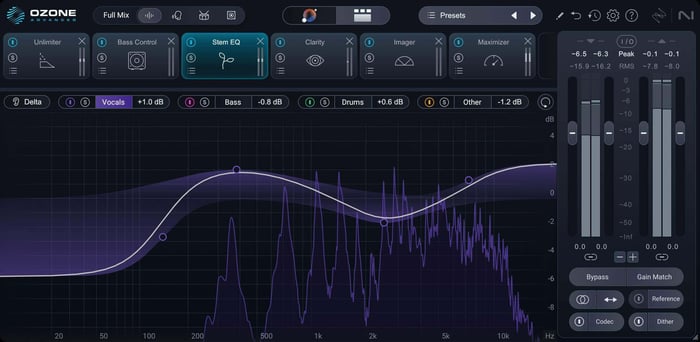
Ozone Stem EQ on vocals
2. Transparent limiting with Ozone Maximizer
For daily client deliveries, Sullivan aims for 7–9 BPM. His go-to settings within the Maximizer are IRC3 and IRC5, specifically utilizing the clipping mode for a modern, competitive sound.
"There's just something that like on my dailies I use Ozone on all my dailies," Sullivan says.
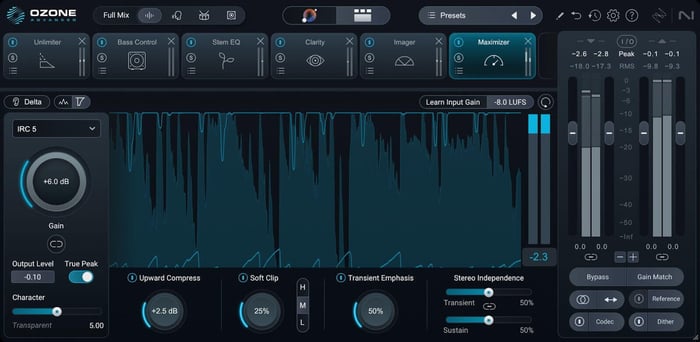
Ozone Maximizer with IRC5
3. Shaping kick drums with Neutron 5
While Neutron offers a massive suite of tools, Sullivan often loads it just for the Transient Shaper module. "I love it. It's two sliders. I've never taken it off 'sharp,'" he says, using it to dial in the perfect pocket for kick drums.
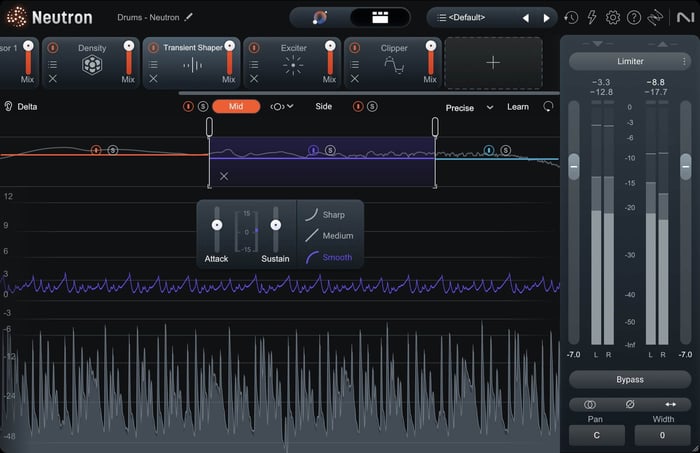
Neutron 5 Transient Shaper
4. The "80 Hz rule" with Brainworx
A cornerstone of Sullivan’s philosophy is ensuring all material below 80 Hz is mono and not hitting the compressors. He achieves this using the mono-maker feature found in many Plugin Alliance tools, ensuring the low end remains tight and compatible across all playback systems.
Rethinking the Atmos workflow
Sullivan has a unique theory about Dolby Atmos: it provides a chart "bump" on Apple Music. He noticed an indie client charted higher than a major-label artist simply because they provided an Atmos mix.
However, he remains critical of how Atmos is often handled as an afterthought. During his work on Kid Cudi's Intergalactic, Sullivan’s team focused on keeping the mix immersive without losing the impact of the stereo version. His advice? Keep it simple.
"Atmos could be great when we start creating in Atmos,” Sullivan says. “Right now, it's just an afterthought to make money... Why does it have to be so [quiet]? I'm all about no loudness wars, but the pendulum has swung so far to the other side now.”
He often bounces stems through his stereo mix bus chain before moving into the Atmos stage to retain the "vibe" of the original production.
Final thoughts
Sullivan's trajectory proves that work ethic and a willingness to "dare to fail" matter more than expensive pedigree. Whether he’s using a 56-channel console or a single iZotope plugin, his focus remains on making the music knock.
The gear will change, and the software will update, but the core lesson remains: build something that matters to you. Everything else is just noise.