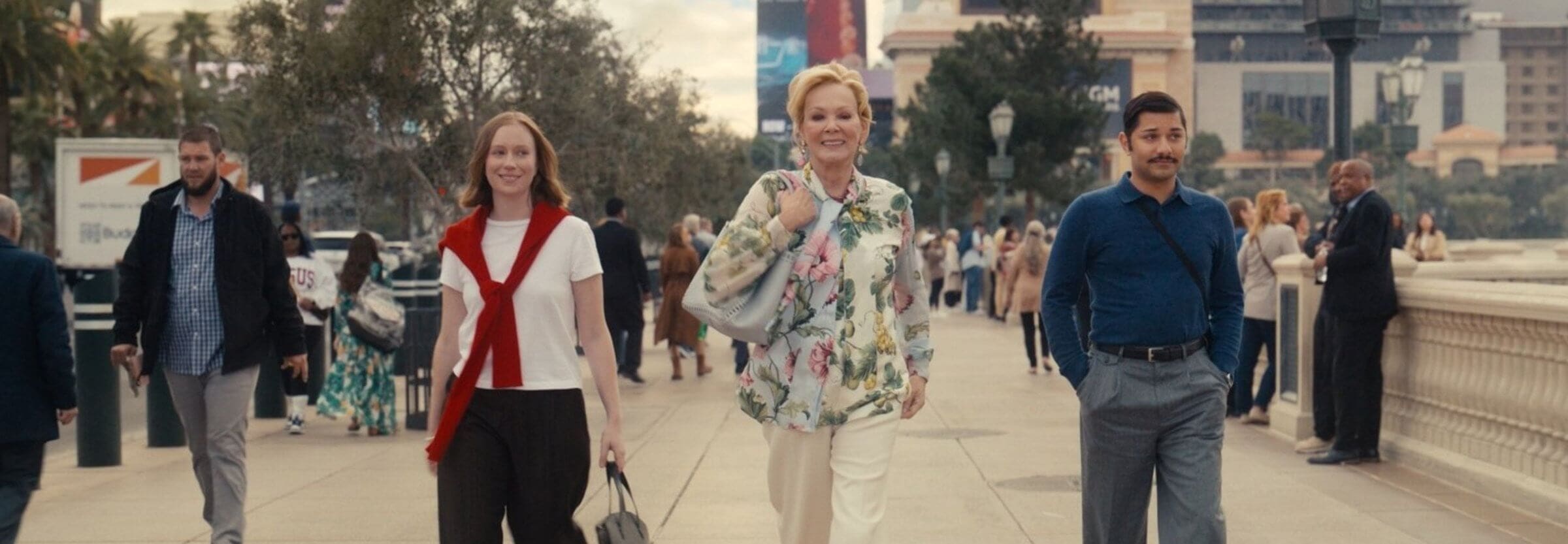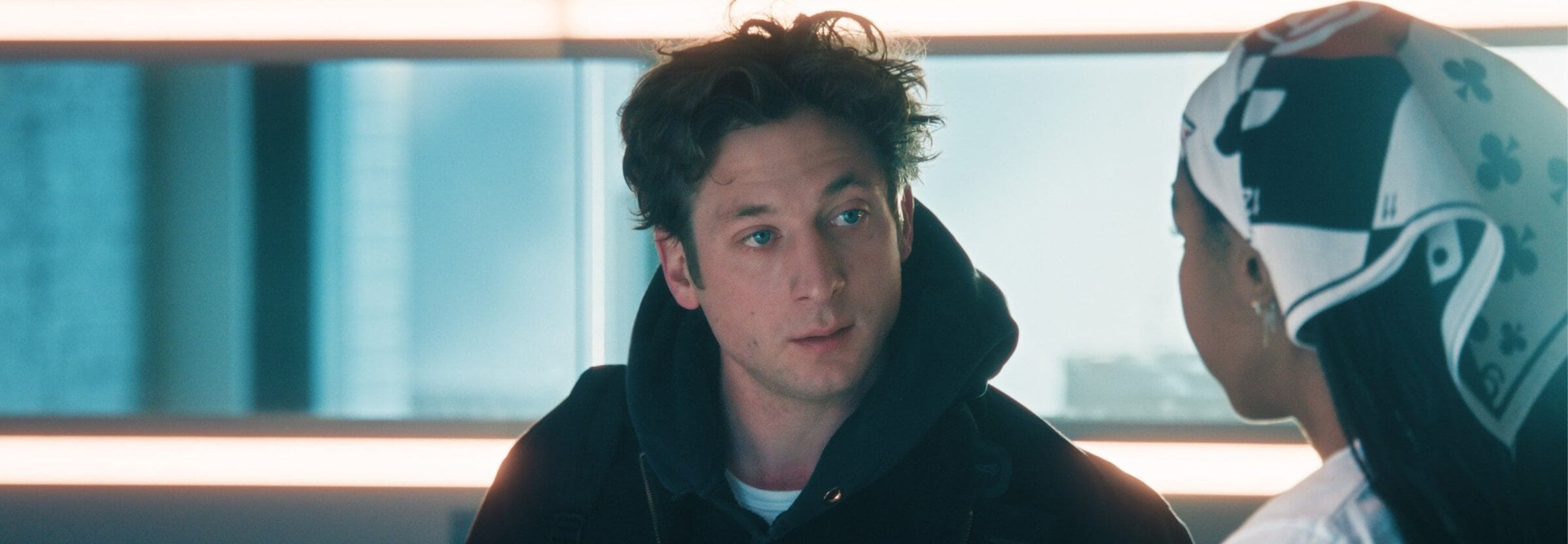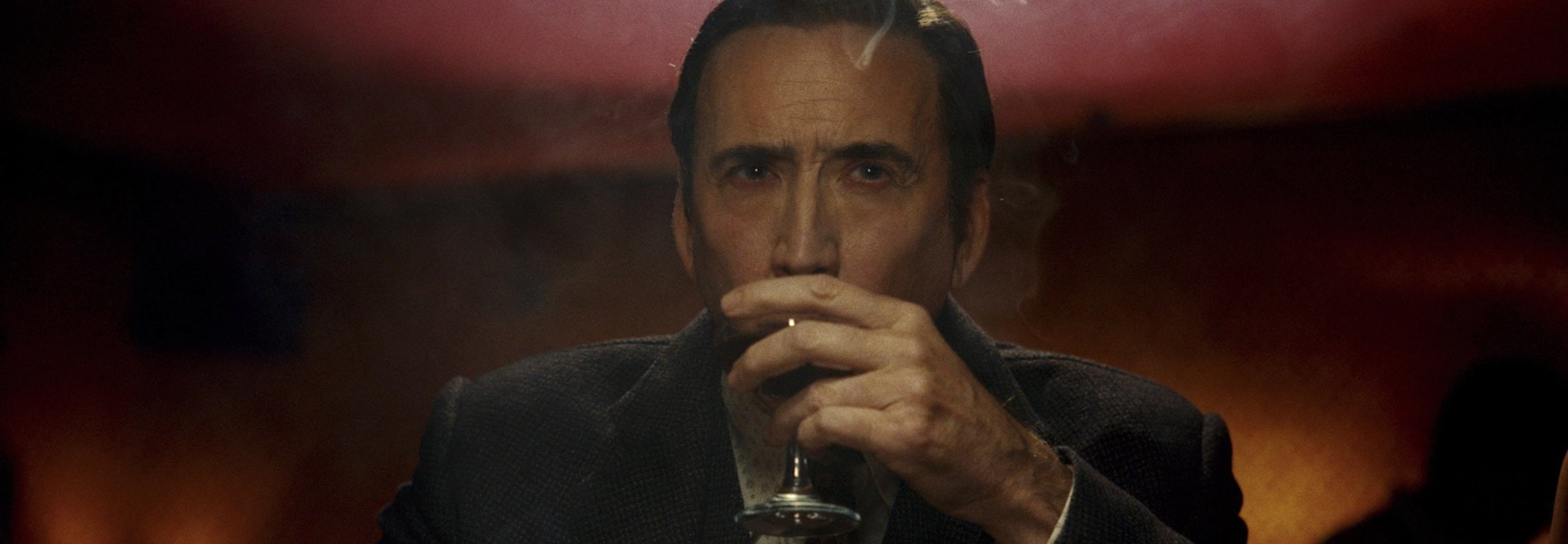

Bringing a unique vision to life requires balancing nostalgia with modern audio standards. In Spider-Noir, the team was tasked with creating a sonic identity that honors the vintage 1930s era while keeping contemporary audiences fully immersed.
We sat down with Emmy-nominated re-recording mixer Nick Offord and Emmy-winning sound designer and mixer Ryan Collins to discuss how they crafted the show's audio space, navigated complex dual visual releases, and relied on iZotope tools like iZotope RX and Equinox reverbs to shape their mix.
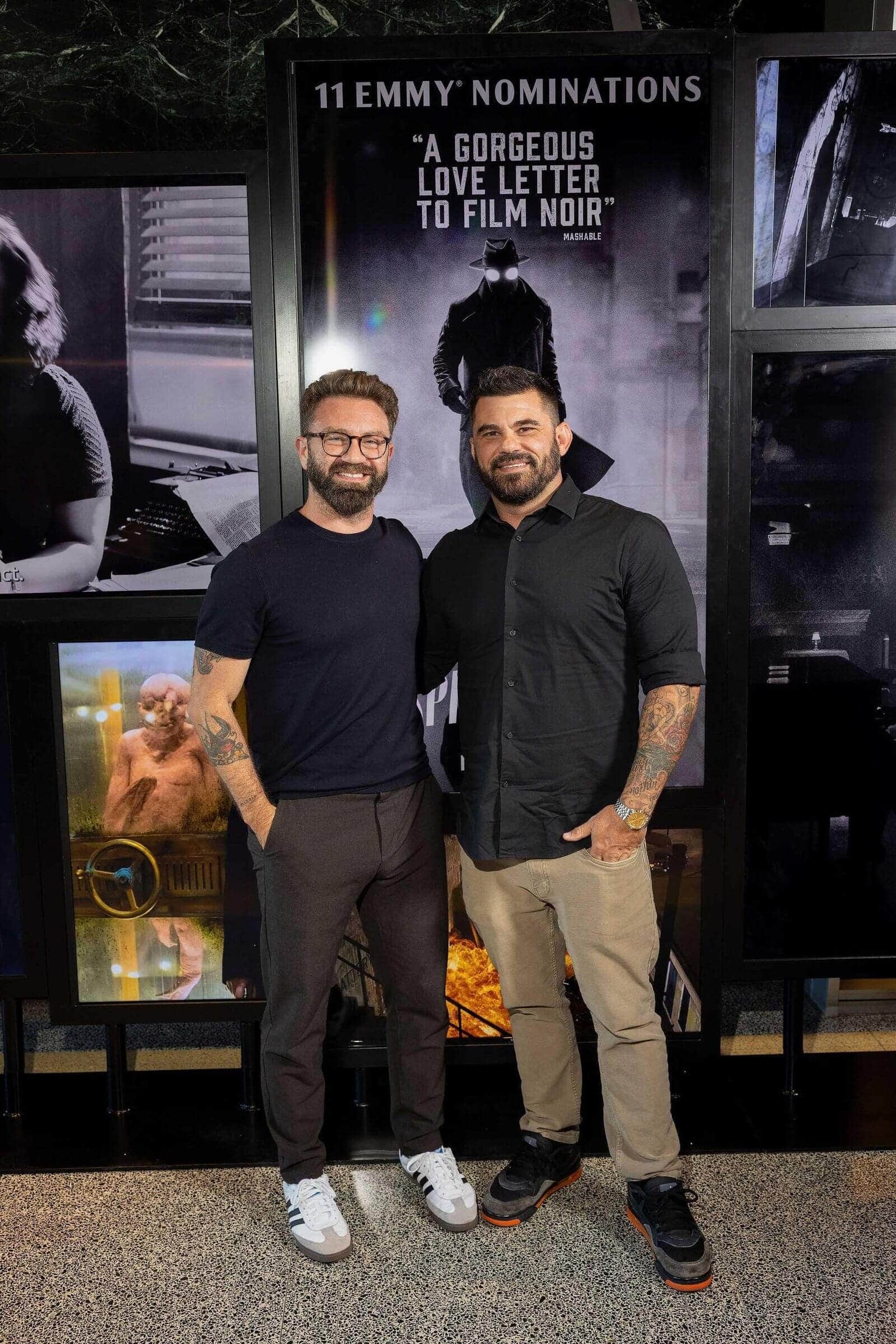 Sound designer/mixer Ryan Collins and re-recording mixer Nick Offord
Spider-Noir interview
You are both up for Emmy nominations this year for your work on Spider-Noir – congratulations! Looking back on the season, what was the biggest challenge for each of you, and was there a specific iZotope plugin you couldn't have done it without?
Nick Offord: Thank you! We were incredibly fortunate to be part of such a unique show. The biggest challenge was discovering the show's sonic identity. There were a lot of discussions about how to approach this new world, and we wanted to stay true to the period while also taking full advantage of a modern, immersive soundtrack. After some trial and error, we found a sound that everyone felt was authentic to the era while giving us the flexibility to fully immerse the audience whenever it served the story.
I used iZotope RX and Equinox reverbs throughout the entire show. These tools were instrumental in bringing clarity, depth, and life to the dialogue.
Ryan Collins: One of the biggest challenges on Spider-Noir was finding the balance between making the show feel like it came from the 1930s while still keeping it exciting for a modern audience. We spent a lot of time making sure the sound had that antique sonic character without feeling old or thin.
RX was something the dialogue team used often for production cleanup, but creatively I probably leaned on iZotope's Equinox Reverb the most. It really helped me build spaces that felt moody and atmospheric, which is such a huge part of the noir style, while still keeping everything clear and immersive.
I truly love how iZotope’s Equinox Reverb gives you the ability to really define a space and shape an environment. Whether you’re creating a small, intimate interior, a large open exterior, or anything in between, it gives you a lot of control over the character and emotion of the space.
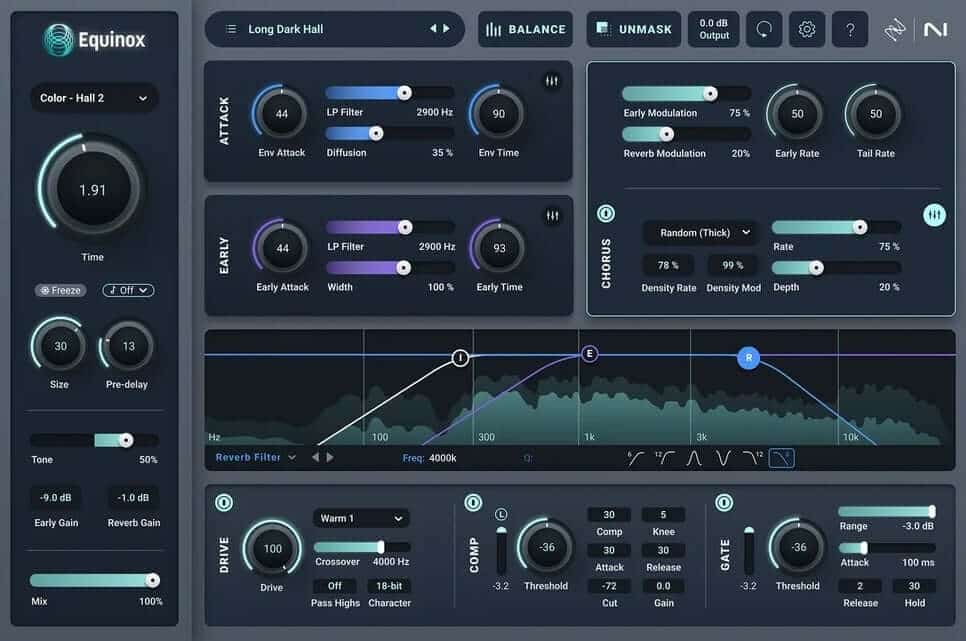 iZotope Equinox reverb
Spider-Noir is unique for offering two ways to watch: Authentic Black & White, and True-Hue Color. How did you thread the needle and deliver a mix that sounds great and makes sense in both styles?
Nick Offord: This goes back to the biggest challenge I mentioned earlier. We mixed multiple versions of the first episode, one of those versions sounded very mono and "canned." It worked incredibly well with the black and white picture, it genuinely felt like you were watching an old movie. The biggest note we kept getting from our Showrunner, Oren Uziel, was that he wanted the show to feel warm and inviting. That early version didn't have that quality, and it also didn't translate at all with the color version.
We had to dial the effect back and find a more balanced approach. What we ultimately landed on still gives you that noir feel while creating a much more enjoyable and immersive listening experience across both formats.
Ryan Collins: The interesting part was that we only created one mix, so it had to work equally well whether you were watching in black and white or color. In a way, the sound became the glue that tied both versions together. While the visuals changed, the soundtrack was the constant that grounded the audience in the world of Spider-Noir.
We also spent a lot of time creating seamless transitions between a classic 1930s noir sound and a modern, full-fidelity Dolby Atmos mix, allowing the show to shift between those styles without the audience ever feeling pulled out of the story. If we did our job right, the sound made both versions feel like they belonged to the same world.
The dialogue in Spider-Noir is crisp and clear, but still exudes a subtle vintage aura. How did you achieve that effect, and how did RX help you bring the dialogue to life?
Nick Offord: I have to give a big shoutout to our Supervising Sound Editor, Ethan Beigel, and Dialogue Editor, Arielle McGrail. They prepared the tracks so well that it made our job on the mix stage that much easier.
On the stage, iZotope RX was absolutely instrumental in helping me clean up the tracks so we could deliver a clean dialogue track. I spent a lot of time using Spectral Repair to isolate and tame problematic frequencies, and I relied on RX's noise reduction whenever there was a noise floor that distracted from what was happening on screen. Once we had it nice and clean, I was using different EQs and saturation plugins to try and give the vintage texture all while keeping the clarity.
It's pretty incredible what we're able to accomplish with these tools today. RX has completely changed the game.
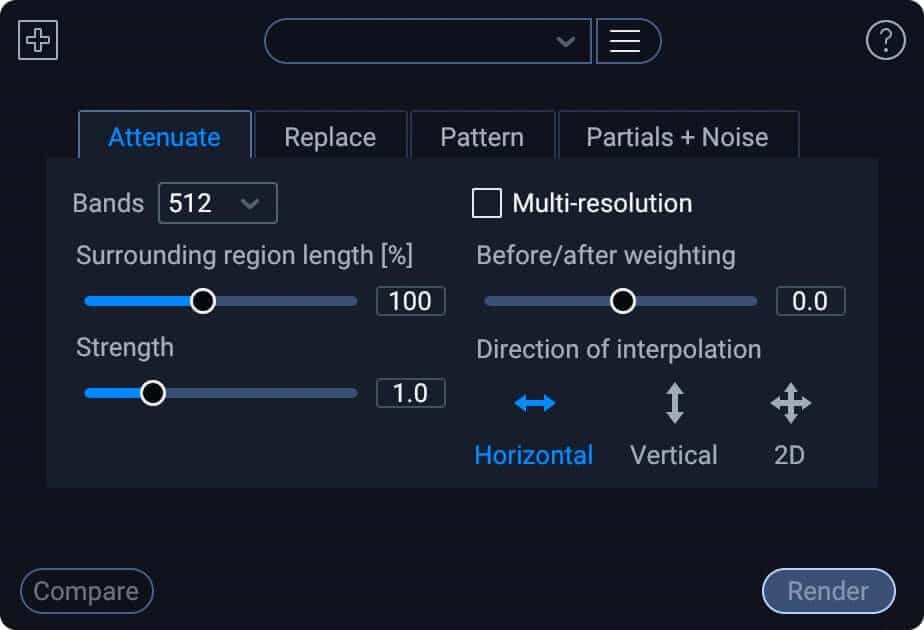 iZotope RX 12 Spectral Repair
Nicolas Cage delivers a lot of cheeky, rapid-fire dialogue into the action sequences. What was your approach to handling ADR, or avoiding it, during brawls and chase scenes?
Nick Offord: The goal is always to preserve the production dialogue whenever possible. If there's a line change, then that's a different story. Luckily for me, Nicolas Cage is incredible at ADR, so the performances he delivers make my job much easier when I'm trying to match the production.
The biggest challenge with those scenes is getting the dialogue to cut through just enough so the audience can clearly understand every word without pulling them out of the moment. We use compression, pitch shift, and a whole host of other tricks to make sure every line is as clear and intelligible as possible. Especially with television, you never know what format or what speakers someone will be listening on.
Costumes like leather coats and superhero masks are known for causing mic rustle and muffled vocals. Did RX save production audio that might have otherwise been ADR’d?
Nick Offord: Again, a huge shoutout to the dialogue editing team; they're magicians!
The answer is absolutely. We get a lot of questions from the cutting room asking if we think a line can be saved because they prefer that performance over another take. More often than not, we're able to make it work, and that's when we dive into RX and get very surgical with the processing.
The trick is knowing when to stop. You never want to over-process the dialogue, so I'll often A/B the cleaned-up version against the original production track to make sure we haven't taken too much life out of the performance.
Are there any specific sounds or sequences in Season 1 that you’re particularly proud of?
Nick Offord: One of my favorite scenes is in Episode 1. The club sequence where Cat Hardy sings "Dream a Little Dream." To me, that entire scene perfectly captures what we were trying to accomplish with the transition from a mono mix into a fully immersive soundtrack.
Once the song really kicks in and we fully embrace the immersive mix, I used Equinox reverbs on her vocal to help draw the audience into the trance Ben Reilly was experiencing. As you hear the dreamy vocals and see the look on his face, everything works together to make you forget about the club and what he was actually there for. Then, when his Spidey-Sense kicks in, it snaps us right back into the mono club mix. It's a really effective example of how we used the transition from mono to Atmos to support the storytelling.
Ryan Collins: The final fight in the last episode is probably the sequence I'm most proud of. By that point, we'd spent the entire season developing the sonic identity of each character, so that scene gave us the chance to bring all of those elements together in one big payoff. Every character had a distinct sound palette, and hearing them collide in the same sequence made the fight feel bigger, more dynamic, and really satisfying. It felt like the culmination of everything we'd been building toward all season.
Spider-Noir sounds intelligible and smooth, avoiding the common problem of dialogue that’s buried under music and effects, or explosions that are too loud. How did you balance translation for different playback environments so it sounds great in full surround, on a phone, and everywhere in between?
Nick Offord: This is one of the biggest challenges when mixing for television. There are so many different ways people can experience the show. With a feature film, you're generally mixing for one format. With television, you have to think about everything from a full Atmos home theater to a soundbar, TV speakers, headphones, laptops, or even a phone.
We definitely check the mix across multiple playback systems. We'll have a TV in the room and switch back and forth between the theatrical speakers and the soundbar or TV. Sometimes we'll even set up a dedicated headphone feed so we can make sure nothing is building up and that the mix translates there as well.
I think it's important to mix in the best environment possible and then work your way down. Start in Atmos, then check 5.1, stereo, and everything in between. The goal is to create a dynamic mix while making sure the experience stays as consistent as possible, no matter how someone is watching.
Ryan Collins: For me, it always comes back to the story. No matter how big the action gets, the audience should never have to struggle to understand what's being said or what they're supposed to be focusing on.
We mixed Spider-Noir in Dolby Atmos, but we were constantly checking how it translated to smaller playback systems as well. We were really happy with how well the mix carried over from a full Atmos theater down to a stereo TV or even a phone. The key to this translation was maintaining the right balance of dynamics and focus throughout each scene. If the dialogue stayed clear and the emotional impact was still there across all of those formats, then we knew the mix was doing its job.
How did you use the interplay between immersive Dolby Atmos and classic mono for the mix of Spider-Noir?
Nick Offord: This was a delicate dance. Initially, we thought we would only move into Atmos for the big "Spidey" moments. But once we got into the process, we realized the sound needed to move and flow with the story and what was happening on screen.
There were moments where we would break out of the mono world to help propel a chase scene, using music or sound effect accents that were full range while other elements of the mix remained mono. That contrast created a really dynamic experience and made the soundtrack much more interesting. It also gave us the freedom to experiment and try something completely different.
The biggest goal was making the transition from mono to Atmos feel subtle and motivated. There are moments where the shift is more noticeable and aggressive, but those choices were very intentional. We only used those transitions when we felt they were helping elevate the scene and support the storytelling.
Ryan Collins: One of the fun creative opportunities on Spider-Noir was playing with the contrast between classic mono and immersive Dolby Atmos. Whenever it made sense for the story, we'd intentionally narrow the sound down to mono to evoke the vintage feel of a 1930s film, then open it back up into a full Atmos soundscape. Those transitions helped reinforce the show's unique style while also making the bigger cinematic moments feel even more impactful. It wasn't just a technical choice; it became another storytelling tool.
For independent sound designers and re-recording mixers hoping to build their career, what advice would you share?

Stay open to the creative process. Movies and television are special because of all the different people, ideas, and perspectives that come together to create something greater than any one person could make on their own.

Early in my career, I focused on saying yes to opportunities, building relationships, and being someone people wanted to work with. Not just because of the work I did, but because of how I approached the process. There’s no substitute for putting in the time, developing your own voice, and treating every project, no matter how small, as an opportunity to get better.
Elevate your post production workflow
Whether you are crafting world-building reverbs or restoring production audio recorded under tricky conditions, the tools you use make all the difference. Explore how iZotope RX can clean up dialogue and rescue production audio on your next mix.