
Navigating television audio requires versatility. Re-recording mixers James Parnell and John W. Cook II balance the craft seamlessly, mixing dialogue, score, and sound effects across wildly different genres – from the comedy of HBO Max’s Hacks to the atmospheric tension of DTF St. Louis. James also worked the post-apocalyptic world-building of Amazon Prime Video’s Fallout.
With multiple Emmy nominations under their belts, the mixing duo sat down with us to break down their collaborative workflow, how they handle busy mix passes, and the iZotope RX 12 tools they rely on to keep their mixes clean and impactful.
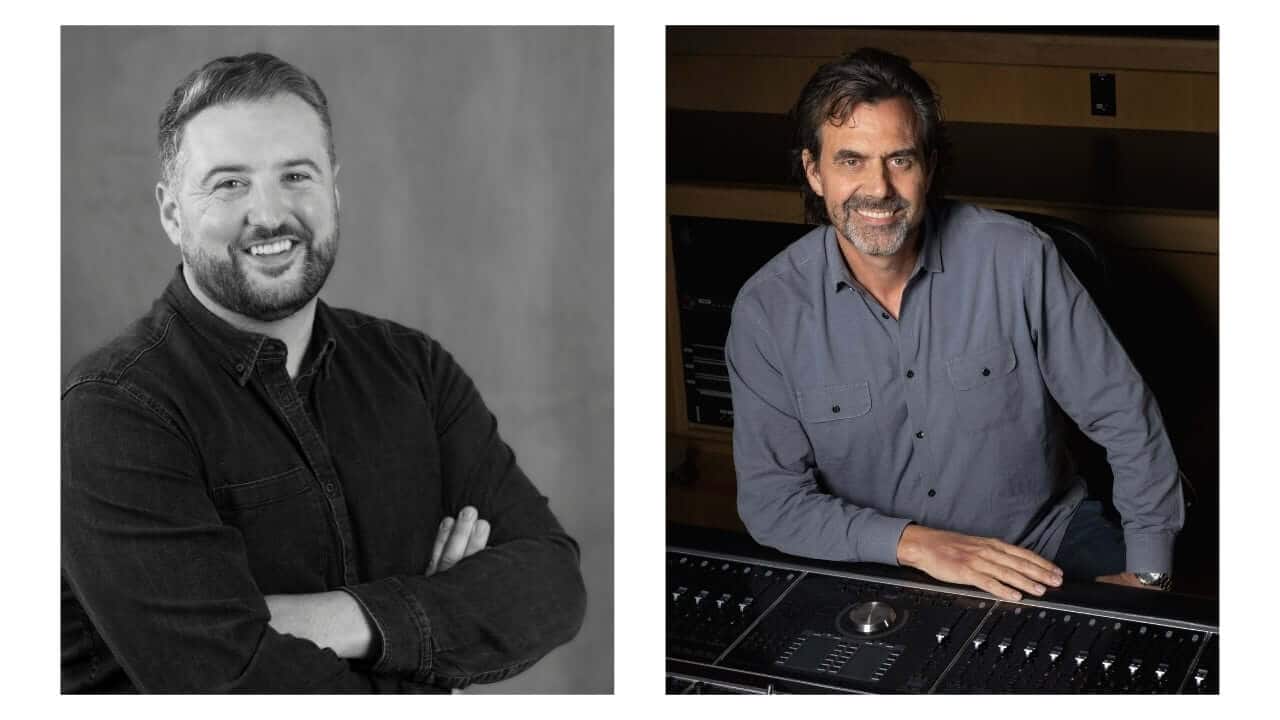 Re-recording mixers James Parnell and John W. Cook II
Interview with James Parnell and John W. Cook II
You both work together as Re-Recording Mixers on DTF St. Louis and Hacks. How do you divide and conquer the mix between dialogue, music, and effects on the mix stage, and how do you collaborate with directors and sound supervisors to give each show its distinct identity?
John: After our sound supervisors have their first spotting session with the showrunner, picture editor, composer, and music editor, we start to get a glimpse of the creative direction for sound. In the case of DTF St. Louis, James and I had a pretty good idea before we began mixing that sound would play a significant, subtle role in supporting mood and tension. Our first mix passes were about presenting what that meant, and once we built some trust, there was an openness on the mix stage to collaborate on solutions, variations, and direction.
James: Regarding the workflow on the mix stage, John and I trade off time with speakers and headphones. This allows John to mix dialogue and music using the main speakers, while I predub effects, backgrounds, and foley on headphones. Once he has printed a few scenes of dialogue and music, we’ll flip monitoring sources so I can weave the sound effects into and around the dialogue and music while he predubs the next few scenes on headphones. It’s a smooth way to present our intentions for the mix to one another, cross-reference what each of us has already mixed, and make adjustments on the fly.
If we’re working with a new showrunner, John and I will also watch previous shows they’ve worked on to get an idea of how they utilize sound to support their story. Listening to previous work from a showrunner can reveal their aesthetic, giving you a framework of understanding and creative ideas when starting the mix. For DTF St. Louis, referencing our showrunner’s previous show, Patriot, offered great inspiration.
In DTF St. Louis, nominated for Outstanding Sound Mixing, the audio navigates intimate character moments alongside complex atmospheric environments. What were the biggest technical challenges on the dialogue pass, and how did iZotope RX help keep the mix pristine?
John: Dialogue was consistently forward in our final DTF St. Louis mix, so it was important to me that the soloed dialogue stem sounded good and worked on its own. When I work this way, James has more bandwidth and "space" to mix ambiences in quieter scenes. Our production sound mixer did a great job with booms and lavs, and our dialogue editor did excellent work with de-clicking and a small amount of noise reduction.
On the mix stage, RX is a critical tool for me to take dialogue to an even tighter place with subtle de-clicking, EQ matching, ambience matching, and de-cracking.
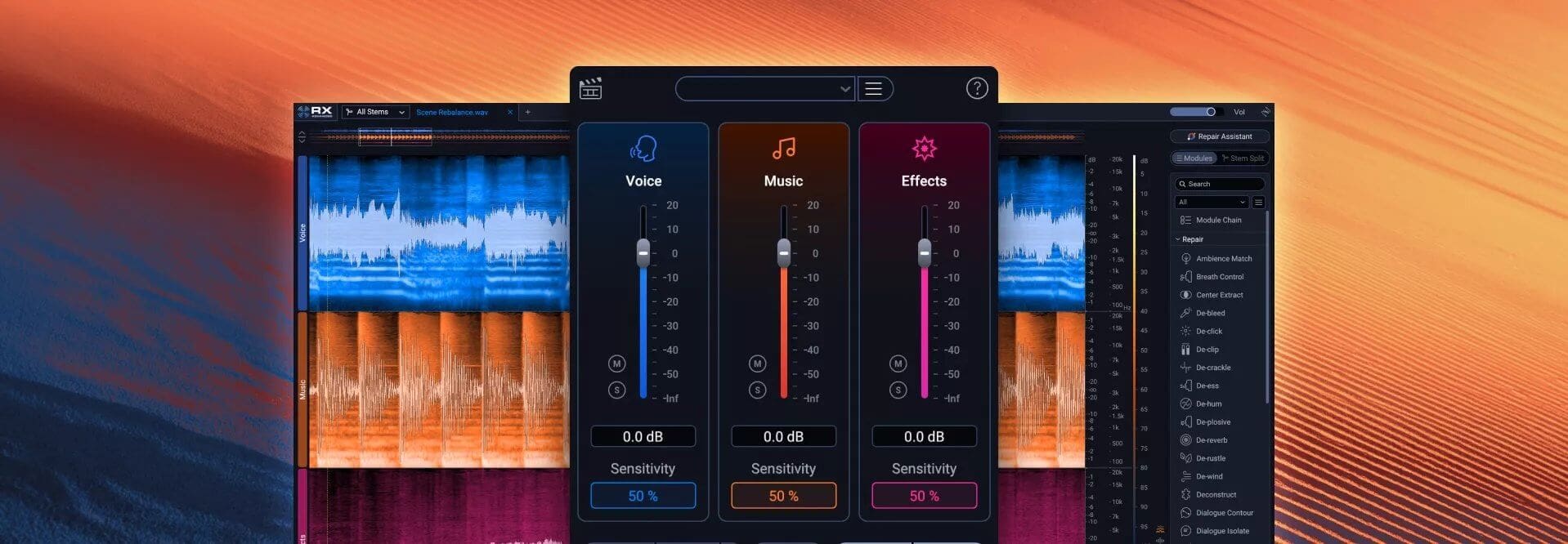
James: There are a bunch of tools in the RX 12 Post Production Suite that helped in lots of ways on the sound effects side. I utilize RX 12 a lot on backgrounds and ambiences for tasks typically reserved for dialogue workflows.
Isolating ambience elements: When a track with great bird calls has an inherent layer of broadband wind or noise, I use Spectral De-noise to sample that air/wind and remove it. This gives me more control over the birds (and the ability to pan them) without hearing unwanted air.
Cleaning up unwanted sounds: When fantastic wind recordings feature unwanted bird chirps, I use the RX 12 Audio Editor to visualize the sound and literally paint it out with a few clicks, salvaging the wind recording without having to "tire patch" (copy/paste) small file sections over and over.
Taming transients and low end: I utilize De-click constantly on everything from SFX to Backgrounds and Foley to attack unwanted transients that give a brittle feeling to a soundscape. De-plosive is also great for removing unwanted wind buffeting on a microphone capsule or knocking the low end off a sound effect recorded in close proximity to a mic.
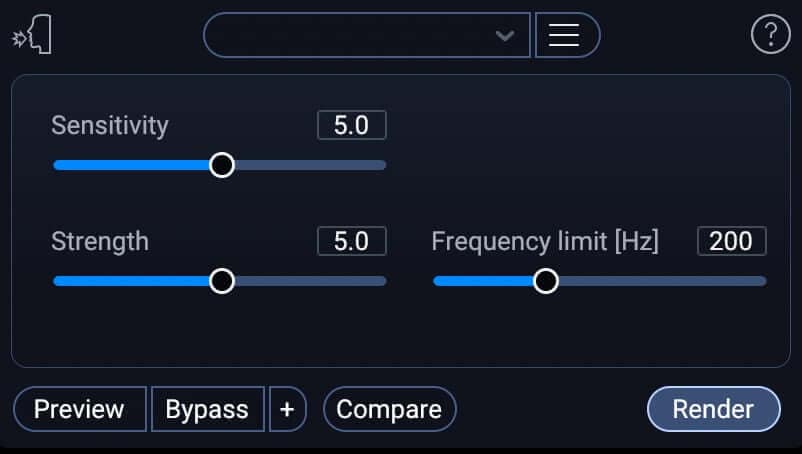 iZotope RX 12 De-plosive module
John, as a veteran re-recording mixer, how do you approach establishing the balance between dialogue clarity and musical score – especially when cutting between high-energy banter and quieter emotional conversations on Hacks?
John: Whether we are working on a loud high-energy scene or a quiet scene with a lot of space between lines, I first manage the short-term dynamics of the dialogue: the dynamics within each sentence, the hard consonants that compromise warmth, the low-mids that compromise clarity, the balance between characters, and the filtering for noise.
When that is done well, I can work with a dialogue "predub" that makes bandwidth available for the dynamics of the score. If dialogue is managed on its own, the score can live in the track as low or as loud as the story calls for. When things get loud, I may need to tweak dialogue low end and upper mids a bit more so it can cut through without being harsh.
James, you also received a nomination for Sound Effects Editing on Fallout. How did you craft these intense post-apocalyptic environments, and how do you ensure heavy sound effects leave room for dialogue and music?
James: I was brought onto Fallout primarily to cut ambiences and spotted background effects. So much of Season 2 is set on the journey to – and within the walls of – "New Vegas." The post-apocalyptic landscape needed to sound arid, vacant, and worn. Even simple locations, like quiet interiors, needed to give the feeling that they had survived a nuclear war.
I used a lot of stressed metal sound effects combined with pitch shifting and reverb to create a worn, broken feeling – like at the hospital where Lucy and the Ghoul get attacked by the Radscorpions. When the Prydwens fly over the hangars, or during the attack in Episode 4, I wanted to give the experience of the action being close to the actors, so I used rattling corrugated metal sound effects to enhance the feeling that explosions were shaking the base itself.
I also used a ton of sand and dust recordings to enhance wind gusts throughout the whole season. Interestingly, when de-clicked, sand recordings can double for snow blusters, which I used heavily during the flashback to Cooper fighting on the Alaskan Front. Picking and choosing moments between lines of dialogue to play these sounds helps continue the experience of being physically immersed in that space without giving the mixers the task of riding faders to steer SFX out of the way of dialogue.
Looking across both Hacks and DTF St. Louis, what is the one iZotope plugin or feature on your mix bus or track stack that you couldn’t live without?
John: For me, it’s De-click. I have SoundFlow scripts with five or six different settings. I use it for the occasional clicks in dialogue, but I also use it to soften "clicky" or raspy consonants in an actor's voice or performance.
James: I use the RX Audio Editor a lot for a variety of situations. It's super helpful when you have to save an interesting background track that has a constant whine or hum, or for removing a random noise deep within the sonic profile of the track. It also gives me the ability to utilize the entire gamut of RX 12 modules to seamlessly smooth over a sound that has an unwanted element to it. Sometimes I’ll use Ambience Match to sample a background track, and then selectively paste it within that track wherever I need to make modifications.
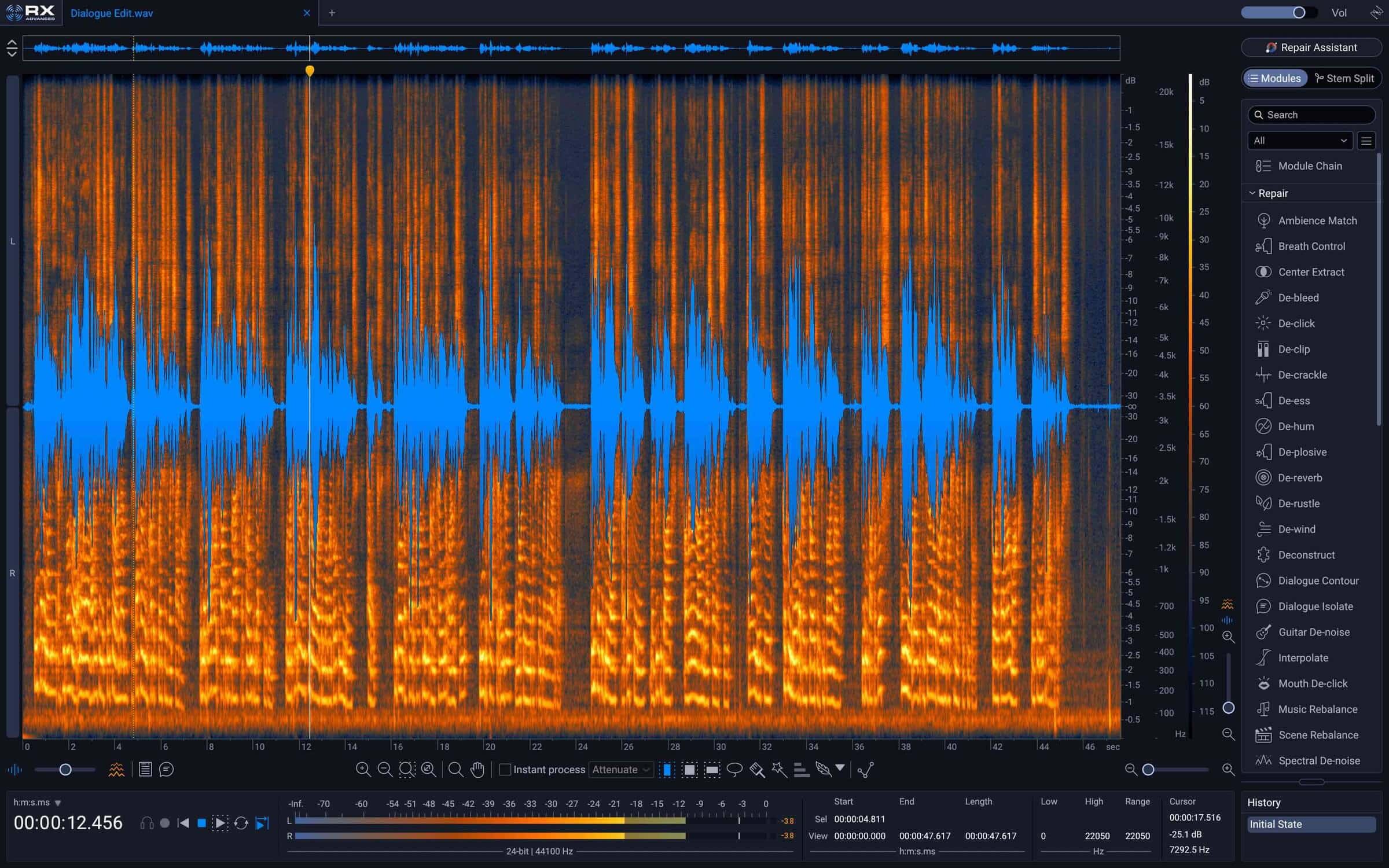 iZotope RX 12 Audio Editor
Was there a specific high-stakes moment on DTF St. Louis or Hacks where an iZotope tool literally saved a line or a scene from having to go to ADR?
John: Spectral Repair saves the day consistently for me. I’ll often "paint out" crickets, cars passing by, or birds that our dialogue editors missed. Unless it’s a line or performance change, nine times out of ten our showrunners would rather use cleaned-up production audio than ADR. EQ Match has also saved me a lot. For those times when I just can’t get an ADR line to match the production audio, it really helps bridge that gap.
For up-and-coming re-recording mixers and sound editors, what advice would you share about building an audio career across diverse TV formats?
John: One of the things I love about the craft is that you must perpetually develop it. Whether you are discovering new techniques for dynamics, EQ, time management, communication, immersive mixing, Pro Tools, RX, and other plugins, or networking, you are constantly building on what you know. Creating any career starts with the limited experience you have. Be intentional about the unique way you’re building your knowledge. Whatever it is, listen to a lot of movies and TV, and hone what the "target" for a great-sounding mix means to you.
James: In any career, you’ll get to work with lots of people with various skill sets. It's important to be as much of a sponge as possible – always keeping an open ear to listen for new workflows, different approaches, and techniques that can help you solve problems. Odds are, the people you’re working with have encountered the same issue you’re bumping into; being able to listen and learn how to navigate issues will pay dividends endlessly. It also helps build relationships in the industry, creating a network of like-minded problem solvers interested in sharing creative ideas.
Take control of your post-production audio
From surgical spectral repair to seamless background cleanup, having the right tools makes every stage of the mix faster and more flexible. Explore how the modules in iZotope RX Post Production Suite can help you isolate noise, match ambience, and streamline your TV and film workflows.