
Music production and audio engineering are shifting faster than ever. Modern digital audio workstations, AI-assisted processing tools, and immersive audio formats are redefining standard mixing workflows, and the core skill sets needed to craft professional-quality mixes are changing with them in real time. To see where the audio industry is heading, we surveyed leading audio educators and university professors from around the globe to share their observations on mixing challenges, workflow shifts, and essential career skills.
Whether you are balancing your first multi-track session or looking to refine your mix chain, having intelligent, intuitive tools can make all the difference. Download iZotope Neutron through an iZotope subscription free trial to start sculpting cleaner, balanced mixes today.
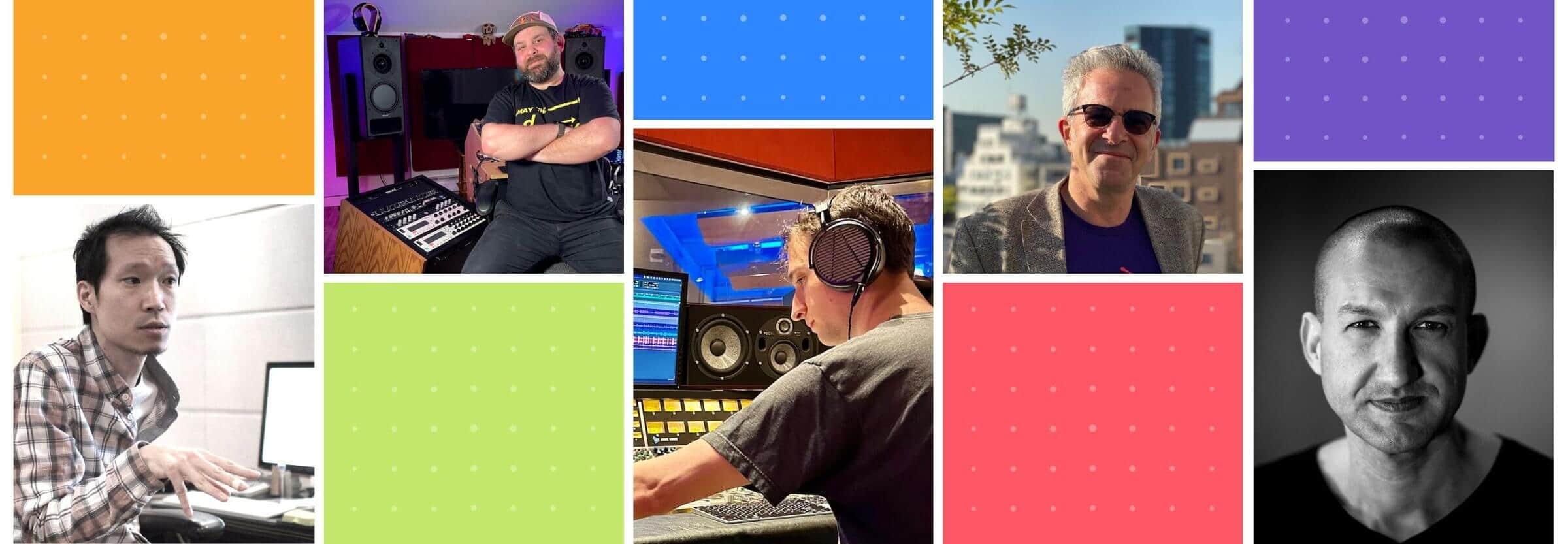
Meet the contributors

Jonathan Wyner – Head of artistic technology initiatives for BEATL (Berklee Emerging Artistic Technology Lab), professor of music production and engineering at Berklee College of Music
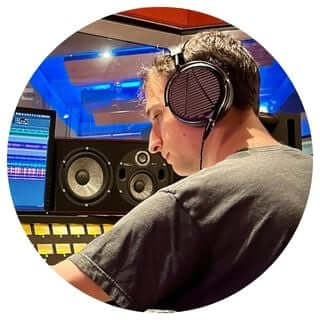
Zach Kornhauser – Professional audio engineer and instructor at Sound Collective
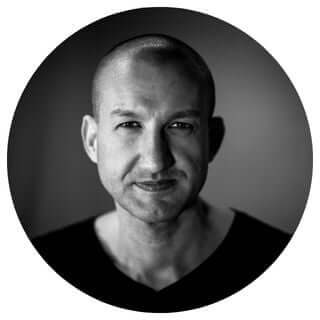
Serdal Aygün – Audio educator and Head Instructor at SAE Munich
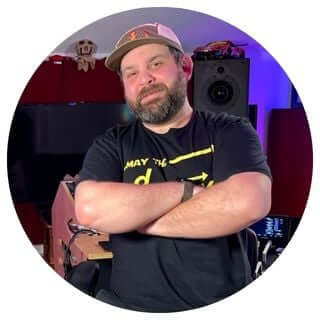
Ian Stewart – Professional mastering engineer and Assistant Professor at Berklee College of Music

Seungkyun Scott Chae – Head of the Department of Applied Music, Kyonggi University in South Korea
2026 audio mixing trends
1. Balance and compression remain the hardest fundamentals to master
Despite access to smart plugins and visual meters, dynamic control and frequency balance remain the biggest hurdle for emerging engineers. While visual feedback helps critical listening, training the ear to judge volume, contrast, and compression takes deliberate and consistent practice.
Ian Stewart points out that dynamic processing remains tricky to hear accurately: "To be very honest, compression is HARD! The basics can often be grasped; however, translating those into something useful, nonetheless good sound, can be really challenging. It can be tricky to hear compression without drastically overdoing it."
Achieving spatial and level balance across a complex arrangement poses a similar challenge. As Seungkyun Scott Chae says, "The most difficult thing for students is intuitively mastering practical balance and executing it in mixing – grasping the volume balance, frequency balance, and positional balance among instruments."
Zach Kornhauser adds that output loudness is frequently misinterpreted: "It's easy to think something sounds better if the actual output is louder than the input... loudness is subjective and can come with consequences."
2. Source repair and restoration are essential pre-mix steps
With home-recording setups commonly in sub-optimal acoustic environments, the boundary between audio restoration and creative mixing has largely disappeared. Cleaning up ambient bleed, room reflections, and noise artifacts is no longer an optional step – it is a mandatory foundation prior to mixing.
Jonathan Wyner explains how advanced restoration tools alter recording choices: "Repair and restoration is an activity that is essential – the question is how and WHEN to use it. Recording a vocal in the same room with a band is less problematic with the ability to isolate vocals afterwards."
Ian Stewart emphasizes how restoration skills translate directly to post-graduation success: "Getting my students familiar and comfortable in RX is an indispensable part of my classes. A former student recently reached out to share that in his current role, the tool he uses most often is RX... it points to the prevalence and necessity of repair and restoration in today's audio market."
3. Calibration, visualizations, and smart audio plugins accelerate workflows faster than ever
Modern mixing workflows increasingly rely on visual analysis, headphone calibration software, and smart AI processing to compensate for room acoustics and streamline technical decision-making.
Serdal Aygün highlights the shift toward mobile, calibrated monitor setups, as well as software with smart assistants and machine learning: "Many students compose, mix, and master on laptops using headphone calibration software. The trend – and therefore the way we teach – is increasingly moving in this direction. In my experience, RX 12 and Ozone 12 Advanced have been real milestones in audio production."
Beyond room correction, visual feedback helps mixers pinpoint masking issues faster. As Jonathan Wyner notes, "Good visualizations support learning to listen critically." Leveraging intelligent spectral analysis alongside critical listening allows mixers to solve problem frequencies without second-guessing their monitor setup.
4. Soft skills and communication edge out pure mixing ability
Technical command of a DAW is expected, but audio educators overwhelmingly agree: long-term success in the audio industry hinges on interpersonal communication, collaboration, and professional reliability.
"People skills tend to get you further in your career than your technical skills," says Zach Kornhauser. "I have taught many engineers that are fantastic at operating a DAW/computer, but once they are recording a multi-track session, they freeze. Technical skills can improve over time, but people skills are often overlooked."
Jonathan Wyner stresses that technical knowledge must be paired with collaboration: "Soft skills – communication, learning to collaborate, learning taste AND humility – those are durable and valuable skills."
Ian Stewart reinforces the importance of workflow reliability: "Communication, workload management, and organizational skills are vital. If the first time someone knows you're not going to make a deadline is when that deadline comes and goes, that's a great way not to get called back for the next gig."
5. Career opportunities are expanding into immersive audio, gaming, and post production
While commercial music production remains a primary goal for many, the fastest-growing career paths for modern audio engineers reside in spatial audio, video game development, film post production, and emerging content platforms.
Jonathan Wyner identifies several high-growth areas: "Live sound is pretty strong right now. There are niches such as expertise in Atmos and Spatial Audio." Ian Stewart agrees, pointing to interactive and immersive media: "Game audio – particularly in the immersive arena – is a field ripe for employment, and good editing, tuning, and repair skills are still very valuable."
Serdal Aygün also points to non-traditional music pathways: "I see the best opportunities in post production, like in film productions, or as specialized mixing and mastering engineers." Expanding skill sets beyond standard stereo mixing unlocks sustainable career avenues in booming creative industries.
Zach Kornhauser recommends that students look into product-related roles. “Other than music production, I'd say music technology and trying to grow in a product-related role. AI is entering every aspect of business, so learning and using those tools will become very important for career development.”
Start mixing with modern trends and techniques
Navigating the audio production landscape in 2026 requires balancing foundational techniques with modern software tools. Big thanks to our expert panel of educators – Jonathan Wyner, Ian Stewart, Zach Kornhauser, Serdal Aygün, and Seungkyun Scott Chae – for taking the time to share their frontline insights and shape the next generation of audio engineers.
Whether dialing in dynamic control, sculpting unmasking EQs, or preparing tracks for final delivery, having intelligent assistant tools in your DAW accelerates your creative decisions. Streamline your workflow and achieve better mix balance faster – start your free trial of iZotope Neutron today.